Chest
Non-contact tester, clip torch, marker.
Loadout
Owning good tools is half the job. The other half is knowing exactly where each one is without looking.
Non-contact tester, clip torch, marker.
Strippers, pocket multimeter, tape.
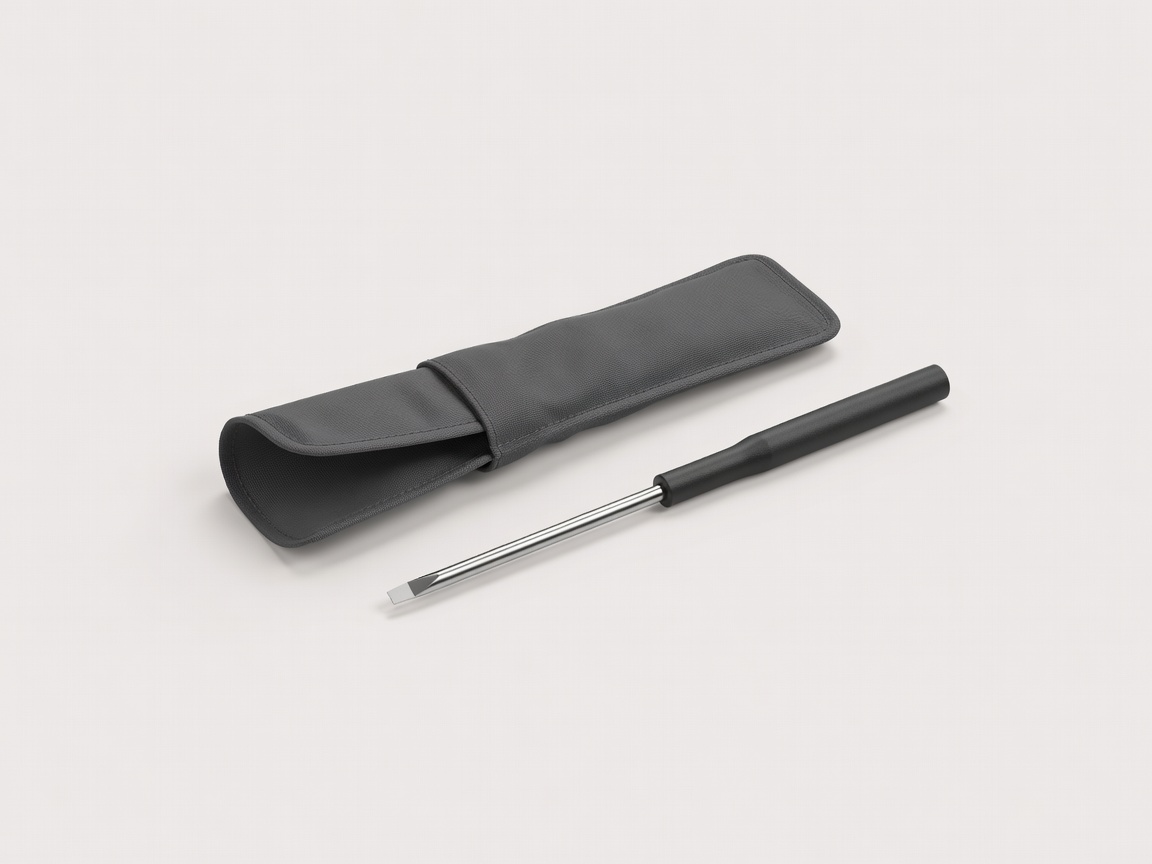
Two-pole indicator, screwdrivers, pliers, knife.
The point of a pocket map is that your hand learns it. Put the same tool in the same place every day and you stop thinking. Switch things around and you will fumble at exactly the wrong moment, usually with a cable in one hand and a torch in your teeth. Pick an order, write it down if you must, and then stick to it for a month before you decide it needs changing.
Chest pocket: light things you grab one-handed. The non-contact tester, a clip torch and a marker. Nothing sharp, nothing heavy, and nothing that can short out against the others. Cap the tip of the tester so it does not poke through the lining.
Thigh pocket: things used on every job. Strippers, a pocket multimeter and a short length of tape. A holster-style pocket, such as the ones Snickers Workwear fit to its trousers, keeps the strippers upright with the handles up.
Pouch: tools used in sequence. Insulated screwdrivers, side cutters, pliers and a knife. The two-pole voltage indicator clips to the edge, where it is easy to reach but cannot be mistaken for the pen. A pouch from a maker like Kuny's is a typical example. Check for loops that hold screwdrivers upright and pockets that separate sharp tools.
Put tools you use with your dominant hand on that side. Strippers go on the right for right-handed people. The torch goes on the opposite side from the strippers so your hands are never fighting for the same pocket. Left-handers simply mirror the layout. What matters is that you pick one and keep it.
A pocket loadout only works if it stays light. Leave these in the van, and fetch them when the job needs them:
A heavy pouch on a long day is a back problem in the making. If you find yourself carrying something you rarely use, move it to the van.
Dropped tools hurt people below. At height, tether anything that matters with a tool lanyard rated for the tool's weight, and never rely on a pocket to hold a loose tool when you lean out. Your employer's working-at-height rules take priority over this page.
Start from your kit list. Your employer or training provider may set a required tool list. Add to it, never subtract. Then take the contact tool on the home page and tell us what we missed.
Your privacy choices We use necessary cookies to run the site and, with your consent, optional ones to measure visits. You can change this at any time. Cookie policy