Wire strippers
Self-adjusting or gauge-marked. One pair, always in the same place.
Thigh pocket
The tools you use on every job. Pick them for how they handle your most common cable, not for the longest feature list.
Self-adjusting or gauge-marked. One pair, always in the same place.
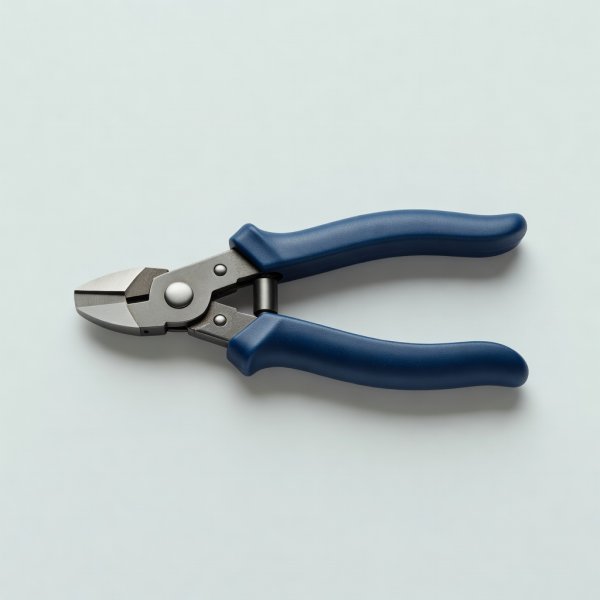
Flush-cutting and insulated. Keeps the strippers from doing a job they should not.
Ferrules, lever connectors and a small ratchet crimper for flex.
Self-adjusting strippers grip the cable and pull the insulation off in one squeeze, so they suit repetitive work on twin and earth, flex and singles. The Knipex 12 42 195 automatic stripper is a good example of the type. Gauge strippers, like the Klein Tools 11055, have marked notches for each conductor size. They take more care but give you more control on fine or odd-sized wire. Many electricians carry one of each and keep the self-adjusting pair in the thigh pocket.
On domestic jobs, expect 1.0, 1.5, 2.5 and 6.0 mm² twin and earth, plus 0.75 and 1.5 mm² flex. A good stripper should cover that range without nicking copper. Test it on scrap first. If you see a shine or a ring on the conductor after stripping, the setting is too tight. A nicked conductor can fail later under load and heat, and it is not something a quick tidy-up will cure.
Strip to the length the terminal asks for, not by eye. Many small terminals want 9 to 12 mm of bare conductor. Wago 221 lever connectors mark their strip length at 11 mm on the housing. Too short and the clamp bites insulation. Too long and you leave exposed copper outside the terminal. If you strip a lot, mark the right length on the handle of your strippers with a permanent marker.
Isolate first. Strip and cut only on circuits you have proved dead. Metal tools in a live enclosure are an accident waiting to happen.
Cutting thick conductors with the cutting notch of a stripper dulls it fast. A pair of 160 mm insulated side cutters with a good edge costs little and protects the strippers. Look for 1000 V marking and the double-triangle symbol from IEC 60900. Wiha, Wera and Knipex all make insulated cutters of this kind. Keep them in the pouch, not loose in the thigh pocket where the edge can chew the lining.
Ferrules, made to DIN 46228, tidy flexible conductors and stop strands from splaying out of screw terminals. A small ratchet crimper gives a consistent crimp that a pair of pliers never will. Lever connectors such as the Wago 221 range save time in junction work and when connecting luminaires. Whatever you use, follow the manufacturer's instructions for conductor type and size, and give the joint a gentle tug test.
The brands named here are examples, not endorsements. Choose by how the tool feels in your hand after a long day on twin and earth.
Your privacy choices We use necessary cookies to run the site and, with your consent, optional ones to measure visits. You can change this at any time. Cookie policy