Clip torch
Everyday light. Clips to the pocket edge or cap peak.
Chest pocket
You cannot strip, test or terminate what you cannot see. A good pocket light is small, bright enough and always in the same place.
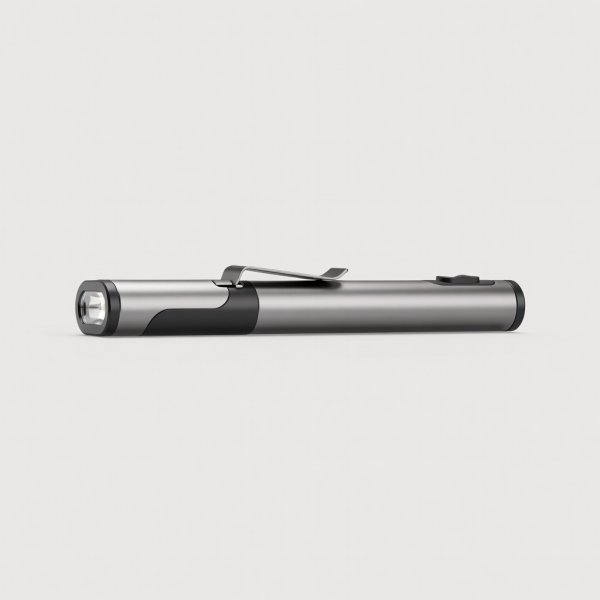
Everyday light. Clips to the pocket edge or cap peak.
Slim, narrow beam. Good for looking into back boxes and consumer unit gaps.
Both hands free in the loft, under floors and in a dark plant room.
For pocket work, 200 to 400 lumens covers most jobs. Higher numbers sound impressive but wash out close-up work, drain the battery quickly and heat the body in your pocket. What matters is the range of modes: a low setting around 20 to 50 lumens for working in a back box, and a high setting for walking a dark room. A light with a single, blinding mode will spend most of its life switched off.
A wide flood beam lights the whole work area and is kinder to the eyes at close range. A spot beam reaches the far end of a loft or a riser. Pen lights tend to have a tight beam, and clip torches often offer a wider one. If you only carry one light, choose a soft flood with a usable spill, then add a small spot light if you spend a lot of time in lofts and voids.
Cable colours and labels are easy to misread under a harsh blue-white beam. Look for a neutral white light with a colour rendering index (CRI) of 80 or more. It makes brown, black and grey conductors easier to tell apart, and the markings on a circuit cable easier to read. A warm tint helps in a dim cupboard, but a beam that is too yellow can make red and brown look alike.
Check the IP rating on the box. IPX4 survives splashes and drizzle. IP65 and above handles a hose-down and dust. A torch that dies the first time it rains is no use in a site cabin or on a roof. Charging ports should have a rubber cover, and the clip should be strong enough to hold the light when you bend over.
The Olight i3T is a well-known slim clip light with a magnetic tailcap. The Streamlight Stylus Pro is a classic pen light. The Petzl Tikkina is a simple, light head torch for loft and void work. These are named as examples of what each type looks like, not as endorsements. A good light from a lesser-known brand that meets the points above will do the job just as well.
Hazardous areas. Ordinary torches are not rated for explosive atmospheres. Fuel sites and similar places need equipment certified for the zone, such as ATEX. Check the site rules before you take your usual torch in.
The clip torch goes in the chest pocket, clipped to the edge so either hand can find it. The head torch lives in the pouch. Neither replaces proper test equipment. Never use a torch to judge whether a circuit is live. A dark bulb or a cold lamp tells you nothing, and the only thing that proves a circuit dead is a tester you have proved first.
Your privacy choices We use necessary cookies to run the site and, with your consent, optional ones to measure visits. You can change this at any time. Cookie policy